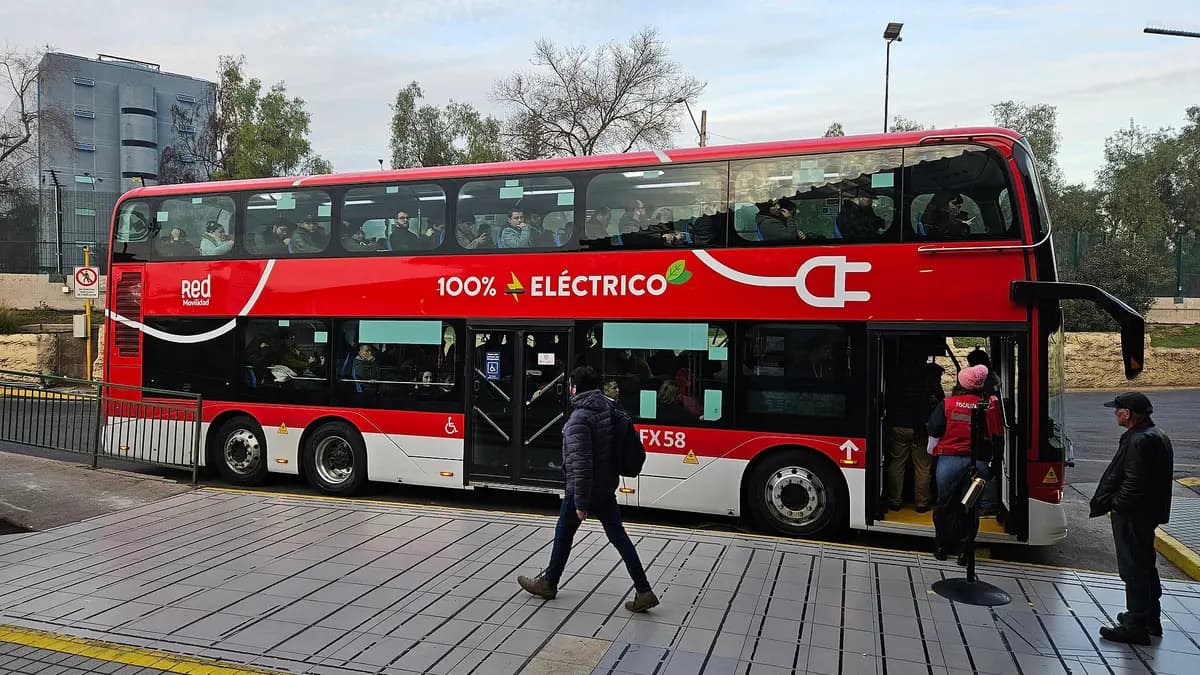
Electric buses in Antofagasta have added a new route. The Antofagasta Regional Government (GORE) delivered seven fully electric buses to route 114 of the city's public transport, funded with a regional contribution of more than 924 million Chilean pesos from the Renueva Tu Micro 2025 program, approved by the Regional Council, the Antofagasta Regional Government reported on October 26, 2026.
With this delivery, the GORE counts 28 electric buses delivered in the city of Antofagasta and 27 more still to arrive. The regional government said it will keep pursuing electric buses for Calama and Tocopilla, although it gave no timeline or amounts for those two cities.
Route 114 links high-lying residential neighborhoods in the north of the city, such as Los Leones, Avenida Bonilla and Pantaleón Cortés, with the rest of Antofagasta, according to the local newspaper Madero. The buses belong to seven owners on the route, who put in their share of the investment with support from the regional fund.
Antofagasta's new electric buses in numbers
The GORE statement does not name the make or model of the buses, but it does list their equipment. Each unit carries 61 passengers, with 26 seats, two of them folding seats in the wheelchair area, and has a low floor for people with reduced mobility.
| Feature | Figure |
|---|---|
| Buses delivered to route 114 | 7 |
| Regional government contribution | More than 924 million pesos |
| Average contribution per bus (calculation) | About 132 million pesos |
| Capacity per bus | 61 passengers (26 seated) |
| Energy use compared with a diesel bus | About 60% lower |
| Battery warranty | Maximum degradation of 20% over 10 years |
| Electric buses delivered in Antofagasta | 28 |
| Electric buses still to arrive | 27 |
Source: Antofagasta Regional Government, October 26, 2026. The average contribution per bus is an Energía Futura calculation (924 million divided by seven) and does not include the owners' investment, which the GORE did not disclose.
The buses also have heating and air conditioning, Wi-Fi, USB Type-A and Type-C charging ports, interior and exterior security cameras, electronic destination signs, blind-spot cameras and proximity sensors to detect pedestrians and cyclists. According to the GORE, the electric motors use about 60% less energy than a diesel bus, and the batteries carry a warranty that limits their degradation to no more than 20% over ten years.
How electric buses in Antofagasta are funded: the Renueva Tu Micro program
Renueva Tu Micro is the Ministry of Transport's fleet renewal program, which gives a contribution to bus owners who replace old vehicles with new ones. According to the 2026 regional fact sheet of the Regional Public Transport Directorate (DTPR), the program uses funds from Law 20,378, known as the Mirror Law (Ley Espejo) of Santiago's Transantiago system, which go directly to regional governments and are approved every year by each Regional Council.
In the Antofagasta Region, the program has replaced 458 buses and paid out 13.864 billion pesos between 2011 and 2024, according to the same fact sheet. The region's total Mirror Law and other transport subsidy budget exceeds 35.76 billion pesos in 2026, including a 50% fare discount for seniors in Antofagasta and Calama, digital payment on about a thousand buses and services to isolated areas.
Regional Governor Ricardo Díaz explained at the handover that business owners make a large investment and that the Regional Council contributes funds so the burden is not so heavy, and he invited other routes to join. "These are the first seven buses on route 114, and we hope they keep growing," he said, according to the GORE statement.
| Region | Buses replaced by Renueva Tu Micro | Funds paid out | Electric bus figure |
|---|---|---|---|
| Antofagasta | 458 (2011-2024) | 13.864 billion pesos | 7 buses with 924 million pesos from the GORE (2026) |
| Los Lagos | 1,178 (2012-2024) | 22.396 billion pesos | 8 electric buses with 992.6 million pesos from the GORE (2024 call) |
| La Araucanía | 1,215 (2012-2024) | 24.345 billion pesos | More than 16 billion pesos approved for the program in 2026 |
Source: DTPR 2026 regional fact sheets (Antofagasta and Los Lagos, April 2026; La Araucanía, June 2026) and Antofagasta Regional Government. With those figures, the contribution per electric bus was about 124 million pesos in Los Lagos and about 132 million pesos in Antofagasta, according to an Energía Futura calculation.
Antofagasta compared with the rest of Chile on electric buses
Chile has the world's second-largest electric bus fleet, after China. As of March 2026, 4,707 electric buses were operating in the country, according to the 2026 Electric Mobility in Latin America and the Caribbean report by the Latin American and Caribbean Energy Organization (Olacde), cited by Reporte Minero. Brazil (1,728), Colombia (1,658) and Mexico (1,095) follow.
The vast majority run in Santiago. In February 2026, the Metropolitan Public Transport Directorate (DTPM) reported 4,088 electric buses in the Red system, 62% of the fleet, up from only 779 in March 2022. Outside the capital, 271 electric buses were operating in 11 regions, and Copiapó stands out with 121 units and a 100% electric public transport system, according to the same information published by Reporte Minero.
| City or area | Electric buses | Date of figure | Source |
|---|---|---|---|
| Chile (total) | 4,707 | March 2026 | Olacde |
| Santiago (Red) | 4,088 (62% of the fleet) | February 2026 | DTPM |
| Regions outside Santiago | 271 in 11 regions | February 2026 | DTPM |
| Copiapó | 121 (100% of the fleet) | February 2026 | DTPM |
| Antofagasta (city) | 28 delivered and 27 to come | October 2026 | GORE Antofagasta |
If the 27 pending buses arrive, Antofagasta would have 55 electric buses, still fewer than half of Copiapó's, but in a city with a much larger transport network. The push for new buses contrasts with the market: new bus sales in Chile fell 68% in 2026, after a record year of electric bus deliveries for Red in 2025.

Why bus owners are looking at electric mobility
Fuel costs weigh more and more on bus operations. Between July and October 2026, fuel prices rose for five weeks in a row and diesel added 401 pesos per liter, according to ENAP's weekly reports. For a bus that crosses the city every day, energy use 60% lower, as the GORE estimates, means direct savings for the operator.
Maintenance, which is lower for an electric motor, and working conditions also matter. Danilo Arriagada, a route 114 driver, said drivers will be more relaxed with these buses, and Marcos Maluenda, the route's legal representative, thanked the seven owners who invested and said the project brings "an evolution to public transport."
Antofagasta's presidential delegate, Katherine López, asked the community to look after the buses and use them properly, and regional councilor Alejandro Cifuentes highlighted the joint work with the governor to cut pollution and improve universal accessibility.
The Tarapacá region is following a similar path, but with taxis: Iquique and Alto Hospicio will get 18 electric taxis with 500 million pesos from the Collahuasi Foundation and the Energy Sustainability Agency. In the north, where solar radiation is among the highest in the world, electric public transport is starting to move beyond Santiago.
Does your company sell, finance or charge electric buses and fleets? Reach Energía Futura's readers.
See advertising optionsFrequently asked questions
How many electric buses are there in Antofagasta?
The Regional Government reported on October 26, 2026 that it has delivered 28 electric buses in the city of Antofagasta and that 27 more are due to arrive.
What route does line 114 cover?
It links high-lying neighborhoods in the north of the city, such as Los Leones, Avenida Bonilla and Pantaleón Cortés, with the rest of Antofagasta.
How much did the Regional Government contribute?
More than 924 million pesos for the seven buses, through the Renueva Tu Micro 2025 program approved by the Regional Council. The route's seven owners put in the rest of the investment.
What is Renueva Tu Micro?
It is the Ministry of Transport's bus renewal program, funded by the Mirror Law and run by regional governments. In the Antofagasta Region it replaced 458 buses between 2011 and 2024.
Will there be electric buses in Calama and Tocopilla?
The GORE said it will keep pursuing electric buses for both cities, but did not say how many or when they would arrive.