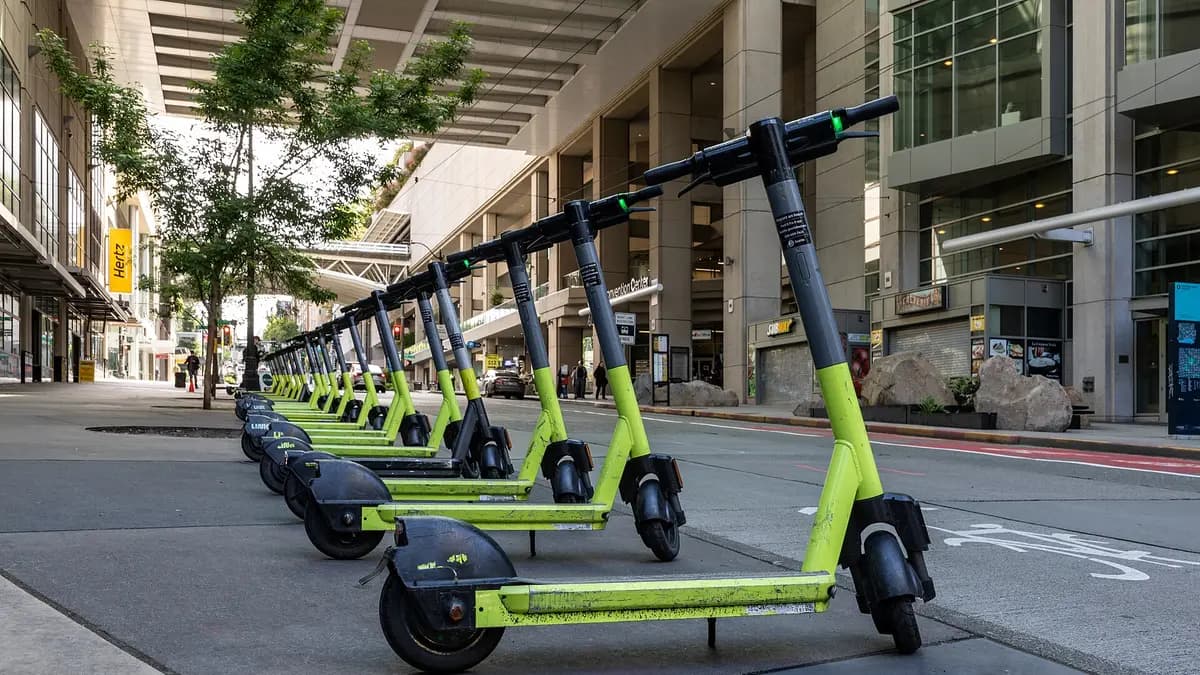
An adult electric scooter sells in Chile for between CLP 184,990 and CLP 429,990 at major retailers, according to prices published by Falabella on 28 October 2026. It is the cheapest electric vehicle to run: charging the 221 Wh battery of the Xiaomi Electric Scooter 4 Lite (2nd Gen) costs about CLP 66, and riding 220 km a month adds less than CLP 600 to the electricity bill, with power at CLP 255.27 per kWh (CGE's BT1 residential rate in Chile since October 2026).
But not every scooter on sale complies with Chilean law. This guide explains what they cost, how far they really go, how much electricity they use and what power and speed requirements an electric kick scooter must meet to use the bike lane as if it were a bicycle.
Electric scooter prices in Chile
Prices vary with motor power, battery size, wheels and suspension. The table lists the adult models Falabella was selling when this article was written.
| Model | Listing details | Price |
|---|---|---|
| Metex folding adult | Top speed 25 km/h | CLP 184,990 (was 399,990) |
| Lubabycas Edge adult | 350 W, 48 V, 40 km range | CLP 269,990 |
| Xiaomi Electric Scooter 6 Essential | Xiaomi's entry model | CLP 329,990 |
| Xiaomi Electric Scooter 6 | 45 km range, 25 km/h, 12-inch tyres, suspension, 800 W stated in the title | CLP 429,990 |
Prices from Falabella's search on 28 October 2026. Technical details are those shown in each listing's title; prices change with promotions and instalments. Children's scooters start at about CLP 120,000.
As a technical reference, the Xiaomi Electric Scooter 4 Lite (2nd Gen), one of the best-selling models, lists in its official spec sheet a 221 Wh battery, a 300 W rated motor (500 W peak), a top speed of 25 km/h, a range of 25 km and charging in about 8 hours with a 36.3 W charger.
Seated scooters and electric motorcycles
Larger, more powerful seated scooters are no longer kick scooters: with motors of several hundred or thousand watts and speeds above 25 km/h, they fall into the motor-vehicle category, closer to a motorcycle, with different rules.
Real-world range: how far it really goes
The range a manufacturer advertises is measured under favourable conditions: a light rider, flat ground, no wind and the most economical mode. In daily use, with hills, cold or a heavier rider, you should expect considerably less. If a model promises 25 km, plan for 15 to 20 km between charges.
Doing the maths helps comparisons: the Xiaomi 4 Lite (2nd Gen) uses about 9 Wh per kilometre based on its battery and stated range (221 Wh for 25 km). With charger losses, each kilometre draws about 10.4 Wh from the grid. A scooter is even more efficient than an electric bike because it weighs less, although its smaller battery means charging more often.
How much it costs to charge an electric scooter
At CLP 255.27 per kWh and 15% charging losses, the cost per kilometre is about CLP 2.7. The table shows the monthly cost by distance, counting 22 working days.
| Use | Kilometres a month | Energy a month | Cost a month | Cost a year |
|---|---|---|---|---|
| One full charge (221 Wh) | Up to 25 km | 0.26 kWh | CLP 66 per charge | — |
| 5 km a day | 110 km | 1.1 kWh | CLP 292 | CLP 3,500 |
| 10 km a day | 220 km | 2.3 kWh | CLP 585 | CLP 7,020 |
| 20 km a day | 440 km | 4.6 kWh | CLP 1,169 | CLP 14,030 |
Energía Futura calculations using the battery and range stated by Xiaomi for the Electric Scooter 4 Lite (2nd Gen), power at CLP 255.27 per kWh and 15% losses, rounded. A scooter with a bigger battery or a more powerful motor uses somewhat more per kilometre. The price per kWh by city is in the price of electricity per kWh in Chile by city and utility.
For scale, riding 10 km every working day adds about 2.3 kWh a month, barely over 1% of what a typical Chilean home uses, as we explain in how much electricity a house uses in Chile. As with the electric bike, the real cost of a scooter is not electricity but tyre and brake replacement and, over the years, the battery, which loses capacity with charge cycles and heat.
What the law says about the electric scooter in Chile
Law 21,088 on road sharing, published on 10 May 2018, treats as cycles vehicles with one or more wheels and an auxiliary electric motor of a maximum continuous rated power of 0.25 kW (250 W), whose power supply is reduced or cut off at 25 km/h. For the law, these vehicles are non-motorised. The cyclists' guide from CONASET, Chile's road safety commission (September 2024), expressly lists the electric kick scooter among cycles, as long as it meets those 250 W and 25 km/h limits.
| Topic | What the rules say | Source |
|---|---|---|
| Power and speed | Motor of up to 250 W rated and cut-off at 25 km/h to count as a cycle | Law 21,088 and CONASET |
| Where to ride | In the bike lane; where there is none, in the right-hand lane of the road | Article 222, Traffic Law |
| Pavements | Only exceptionally and at walking pace (children under 14, older adults, people with disabilities or riders with children under 7) | Article 222, Traffic Law |
| Helmet | A helmet covering at least the top of the head, certified by the Ministry of Transport | CONASET guide 2024 |
| Lights | White or yellow front light and red rear light, at night and in poor visibility | CONASET guide 2024 |
| If it exceeds the limits | It stops being a cycle and falls under motor-vehicle rules; it cannot use the bike lane | CONASET |
A detail few people check: the legal limit is 250 W of continuous rated power, and several popular models state more. The Xiaomi 4 Lite (2nd Gen), for example, lists 300 W rated power on its spec sheet, although its speed is capped at 25 km/h. When buying, look at both figures and ask the seller, because the law requires both conditions.

Which one to choose depending on the trip
- For short trips combined with public transport: a light, folding model with a stated range of 20 to 25 km. What matters is a weight that lets you carry it onto a bus or into a flat.
- For daily trips of more than 10 km: a bigger battery, with 40 to 45 km stated, so you do not have to charge every day.
- For potholed or cobbled streets: 10 to 12-inch wheels, tubed or tubeless tyres and, if possible, suspension.
- For safety: dual brakes, built-in lights, a bell and a wide deck. And always a helmet.
If the trip is long or hilly, a pedal-assist electric bike is usually more comfortable and stable, although it costs more. Prices and charging costs are compared in our guide to the electric bike in Chile.
How to charge it safely
Scooter lithium batteries are safe if used properly. Charge them with the original charger, in a ventilated place away from flammable materials, do not leave them charging overnight unattended and do not use a scooter whose battery has taken a hard knock or got wet. In summer, do not leave it in the sun or inside a car.
Does your company sell electric scooters or micromobility services? Reach Energía Futura's readers.
See advertising optionsFrequently asked questions
How much does an electric scooter cost in Chile?
Adult models sell for between CLP 184,990 and 429,990 at Falabella, according to prices on 28 October 2026. Children's models start at about CLP 120,000.
How much does it cost to charge an electric scooter?
Charging a 221 Wh battery costs about CLP 66 with power at CLP 255.27 per kWh. Riding 10 km a day, Monday to Friday, adds up to about CLP 585 a month.
Can an electric scooter be ridden on the pavement in Chile?
As a rule, no: it must use the bike lane or the right-hand lane of the road. The pavement is only allowed in exceptional cases and at walking pace.
Is a helmet mandatory on an electric scooter?
CONASET includes the helmet among the mandatory safety items for anyone riding a cycle, and a scooter that meets the 250 W and 25 km/h limits is a cycle.
What top speed can an electric scooter have in Chile?
To count as a cycle, motor assistance must cut off at 25 km/h and the motor cannot exceed 250 W rated. Above that, it falls under motor-vehicle rules.