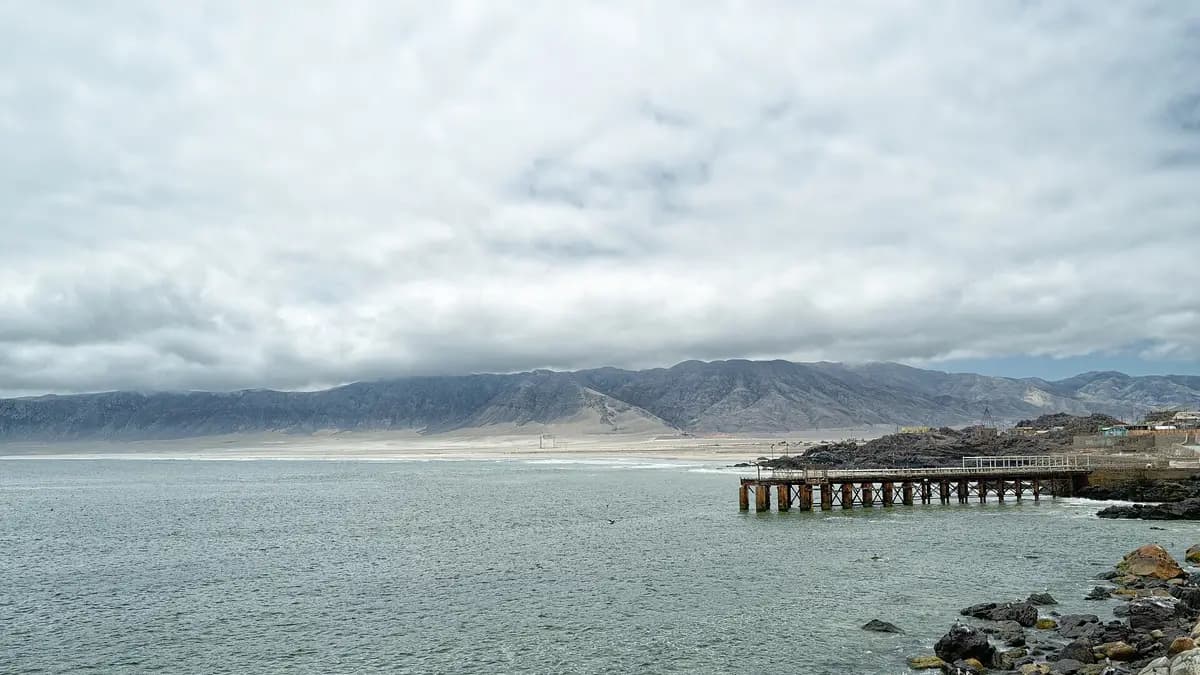
The Chañaral tailings, one of Chile's best-known cases of mining pollution, could become a source of copper. Halo Minerals, listed on London's AIM market, reported on October 23, 2026 that its subsidiary Minera Playa Verde SpA received the mining permit to dredge mineral-bearing material from Chañaral beach, including within the urban area, according to its announcement to the London Stock Exchange.
The permit was granted by the Provincial Presidential Delegation of Chañaral through Exempt Resolution No. 473, under Article 17 No. 1 of Chile's Mining Code, which requires authorization for mining work in towns and on beaches. The Atacama Regional Ministerial Secretariat for Housing and Urban Development raised no objection. The project involves dredging the tailings that were deposited on the beach for decades, processing them in a metallurgical plant to produce copper cathodes and concentrate, and returning the treated sand to the beach.
It is not yet the final green light. Playa Verde still needs the mining easement, which the company expects "in the coming weeks", the maritime concession, which is in process, and other sectoral permits. Then comes the final investment decision. "Our focus now is on completing the remaining workstreams to take Playa Verde to a final investment decision," said Halo's chief executive, Andrew Dennan.
What Playa Verde will do with the Chañaral tailings
The plan is to dredge and process 5 million tonnes a year of copper-bearing sand, with total metallurgical recovery of 72%, according to the feasibility study update Halo presented in May 2026, reported by Reporte Minero. With initial reserves of 34.2 million tonnes, the project could produce 60,329 tonnes of refined copper over its life, which the environmental file sets at nine years.
| Indicator | Figure |
|---|---|
| Declared investment | US$95 million |
| Material processed | 5 million tonnes a year |
| Metallurgical recovery | 72% |
| Initial mineable resources and reserves | 34.2 million tonnes |
| Potential refined copper | 60,329 tonnes |
| Life of operation | 9 years |
| Net present value (reserves only) | US$154.1 million |
| After-tax internal rate of return | 50.9% |
Source: Halo Minerals, feasibility study update (May 2026), via Reporte Minero; investment and life of operation according to the environmental file, cited by Reporte Minero in July 2026. The economic figures are company estimates.
The whole artificial beach holds 53 million tonnes grading 0.24% copper, about 126,000 tonnes of contained metal, although it has not been drilled in detail. The company also estimates up to 100 million tonnes of similar material under the water of the bay, which is not part of the project and for which it has not applied for permits. The timeline Halo gave in May pointed to a bankable feasibility study in the third quarter, an investment decision in the fourth quarter of 2026 and the start of construction in early 2027.
The history of the Chañaral tailings
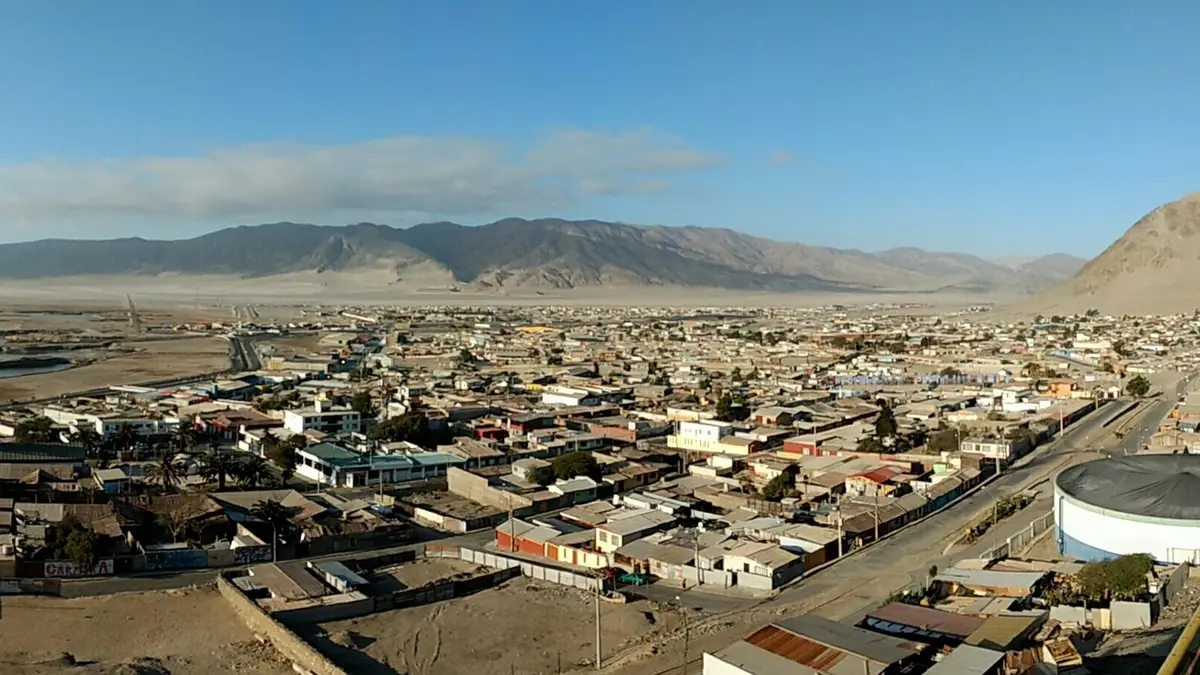
The beach Playa Verde wants to dredge is not natural. Between 1938 and the late 1980s, tailings from the Potrerillos and El Salvador mines, first owned by the American company Andes Copper Mining and later by Codelco, flowed down the Salado River bed to the sea. Tides and waves piled them up in front of the town and formed a beach of metal-bearing sand. A resolution of Chile's Chamber of Deputies estimated the volume at more than 350 million tonnes, and the company itself calculates that some 250 million tonnes reached the bay from two mines about 120 kilometers away.
Discharges into the Salado River ended in the late 1980s through a court ruling that Codelco had to comply with, after years of complaints from Chañaral residents. Codelco says the environmental recovery of the bay began in 2001 and that in December 2003 the maritime authority declared the beach fit for bathing, based on studies by the Atacama Health Service and the University of Atacama, according to its sustainability report.
| Year | Milestone |
|---|---|
| 1938 | Tailings from Potrerillos begin reaching the bay via the Salado River |
| Late 1980s | Discharges into the Salado River end after a court ruling |
| 2001-2003 | Environmental recovery; the beach is declared fit for bathing |
| November 2018 | First favorable environmental rating for Playa Verde |
| April 2021 | The Committee of Ministers orders the assessment to be redone |
| February 2024 | The Atacama Assessment Commission rejects the project |
| October 15, 2025 | The Committee of Ministers upholds the company's appeal and approves it |
| July 2026 | The First Environmental Court rejects a resident's challenge |
| October 23, 2026 | Halo reports the dredging mining permit (Exempt Res. No. 473) |
Source: Halo Minerals, Reporte Minero, Codelco and Emol.
Remediation or risk: the debate over the Chañaral tailings
The company presents the project as a way to recover copper from an environmental liability and rebuild the beach with treated sand. The environmental review, however, was long. The project was approved in 2018, the Committee of Ministers ordered the assessment redone in 2021 after a challenge by resident Manuel Cortés Alfaro, president of the environmental group Chadenatur, and the Atacama Assessment Commission rejected it in February 2024. The Committee of Ministers approved it in October 2025.
Cortés appealed to the First Environmental Court, which in July 2026 rejected the challenge in full. The court reviewed only the health risk from the returned sand, because the claimant had not raised his objections on the marine environment and water resources earlier in the administrative process. The core of the ruling is a voluntary commitment by the company: sand returned to the beach may not exceed 47 milligrams of arsenic per kilogram, more than 50% below the beach's baseline concentration, with monitoring, a ban on depositing material above that limit and immediate corrective measures.
In 2018, Chadenatur warned, according to Emol, about emissions of fine breathable material, existing seepage in the bay and the risks of tsunamis and mudflows at the plant site. The town was hit by the March 2015 mudflow, which also carried material onto the beach.
Tailings as a resource: what is at stake in Chile
Playa Verde is an extreme case of a broader issue: what to do with tailings. The latest Sernageomin inventory, from 2023, lists 795 tailings deposits in nine regions: 475 inactive, 176 abandoned, 128 operating and 15 under construction, according to the Ministry of Mining's 2025-2026 Tailings Agenda, published by Guía Minera. Coquimbo has the most and Antofagasta holds the largest authorized mass.
| Deposit status | Number | Share |
|---|---|---|
| Inactive | 475 | 60% |
| Abandoned | 176 | 22% |
| Operating | 128 | 16% |
| Under construction | 15 | 2% |
| Total inventoried | 795 | 100% |
Source: Sernageomin tailings deposit inventory (2023), cited in the Ministry of Mining's 2025-2026 Tailings Agenda. The four categories add up to 794; the difference is in the original source.
The ministry's agenda has three lines: improving the assessment and information on deposits, promoting reprocessing and reuse of tailings, and encouraging the voluntary relocation and remediation of abandoned ones. Reprocessing tailings avoids opening a new pit, but it does not remove the impacts: it also uses water and energy, and the leftover material must be deposited again in a safe place. New projects in the north are already designed differently: Tovaku, by Pucobre and Codelco, approved in October, will use seawater and its own solar park.
For Chilean mining, low-impact copper is an increasingly important commercial argument. The carbon footprint of Chilean copper, water use and the source of energy are some of the indicators buyers use to compare producers.
The project also arrives in a year when Chile's copper output would close at its lowest level in 23 years, according to Cochilco. At about 6,700 tonnes a year on average, Playa Verde would be a small producer, but its success or failure will be a benchmark for other tailings reprocessing projects.
Does your company work in tailings, remediation or sustainable mining? Reach Energía Futura's readers.
See advertising optionsFrequently asked questions
What permit did Playa Verde receive?
A mining permit to dredge mineral-bearing material from Chañaral beach, including in the urban area, granted by the Provincial Presidential Delegation of Chañaral under Exempt Resolution No. 473 and reported on October 23, 2026.
Can it start operating now?
No. It still needs the mining easement, the maritime concession, other sectoral permits and Halo Minerals' final investment decision.
Where do the Chañaral tailings come from?
From the Potrerillos and El Salvador mines, which between 1938 and the late 1980s discharged their tailings into the Salado River, first under Andes Copper Mining and then under Codelco.
How much copper would the project produce?
Halo estimates 60,329 tonnes of refined copper from its initial reserves, processing 5 million tonnes of sand a year for about nine years.
What happens to the sand after processing?
It goes back to the beach. Under an environmental commitment, it may not exceed 47 mg of arsenic per kilogram, more than 50% below the beach's current concentration.